ONLINE & ONSITE
C O U R S E
you can develop a stronger understanding, uncover new idea of creativity,
the richest knowledge about nature and make meaningful artwork
and connections to real-peacefull of nature.
Our Ecoprinting Technique Choices
get your choice and start to learn!
1. ECOPRINT for BEGINNER
The Ecoprint for Beginner technique is specifically designed for beginners who want to learn ecoprinting from the basics.
It focuses on introducing a simple, easy-to-follow process that can be done safely at home.
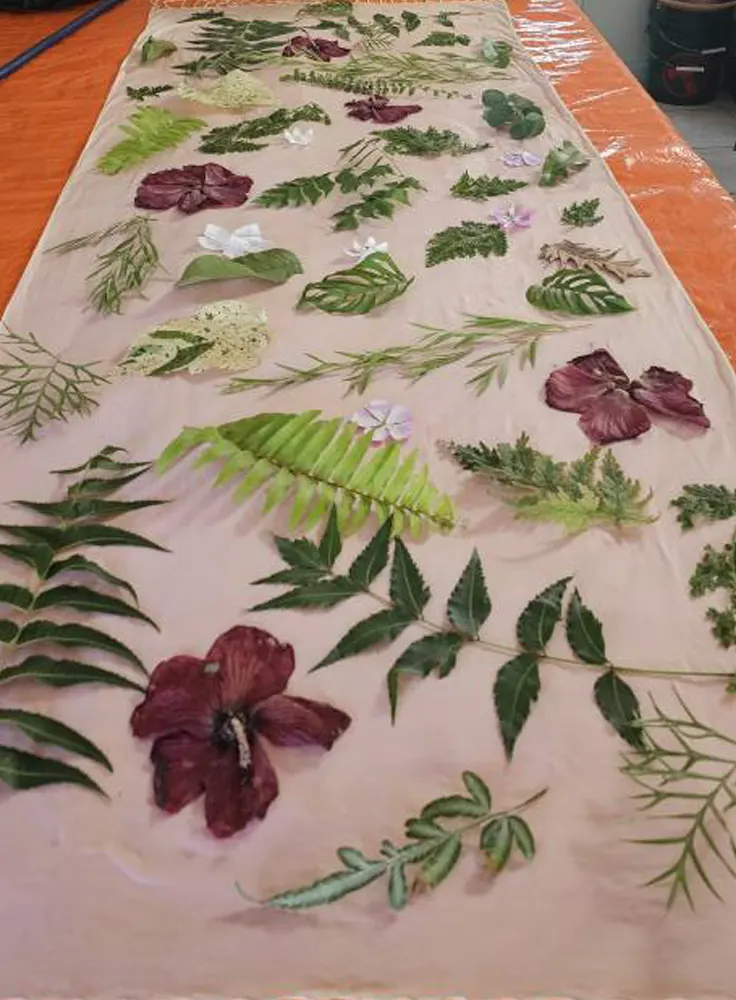
Participants will learn to identify suitable fabrics and leaves,
how to arrange ecoprint motifs,
and the basic process of steaming or soaking until the natural motif appears on the fabric.
This technique doesn’t require complicated tools,
but emphasizes patience, precision,
and an understanding of the process to ensure optimal ecoprinting results.
Ecoprint for Beginners is the first step
to learning the art of natural printing,
honing creativity,
and producing unique works from nature.
🌿 Easy to learn
2. ECOPRINT mix SHIBORI
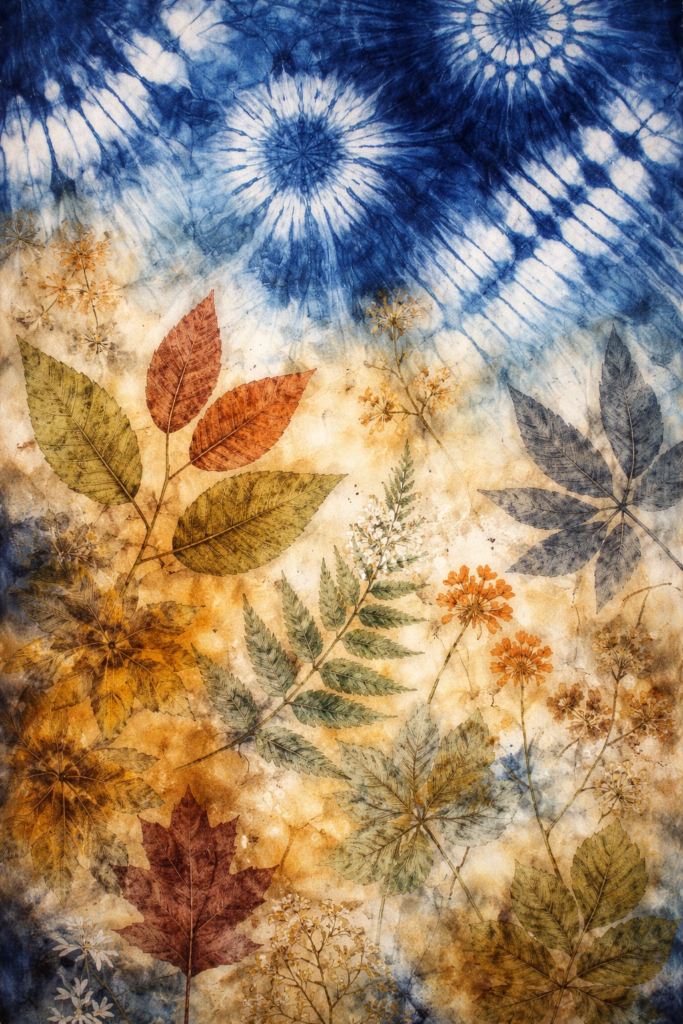
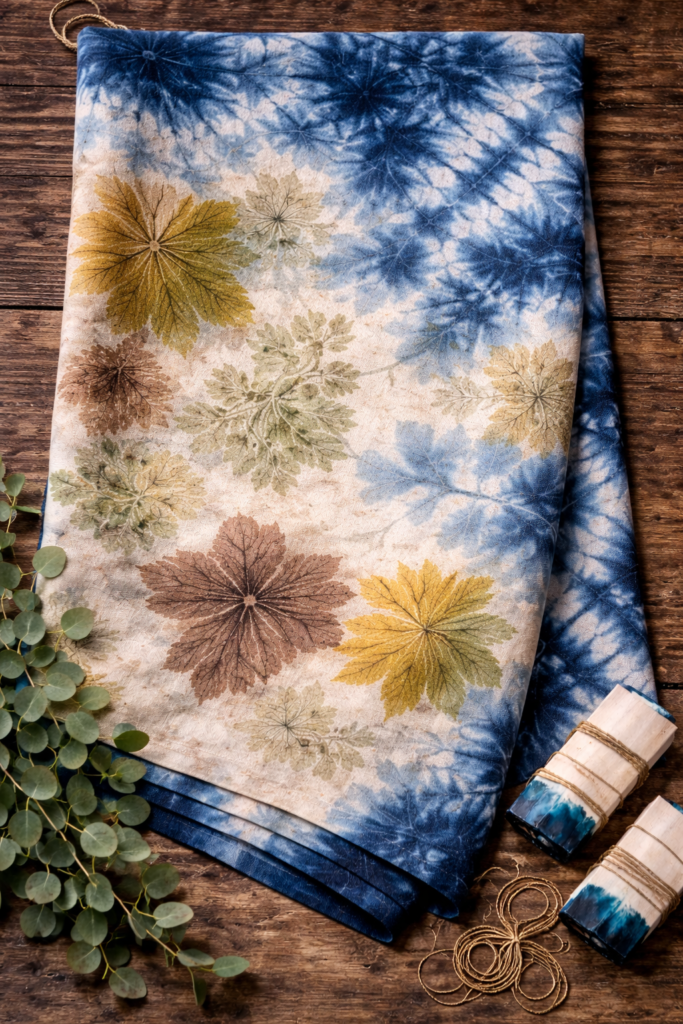
The Ecoprint mix Shibori technique is a combination of natural plant prints and traditional Japanese tie-and-fold techniques.
Ecoprint features leaf motifs and traces of nature,
while Shibori creates geometric patterns through tying, folding, or stitching.
The process begins with arranging leaves on fabric,
then continues with the Shibori technique to create patterns and visual rhythm.
The fabric is then processed using the ecoprint method,
where natural colors and tie-dye patterns interact.
The end result is a fabric with a dynamic composition of motifs,
a blend of organic shapes and geometric structures,
making each piece look strong, modern, and exclusive.
This technique emphasizes creativity, experimentation,
and the beauty of the process, which never produces the same pattern.
3. ECOPRINT mix SASHIKO
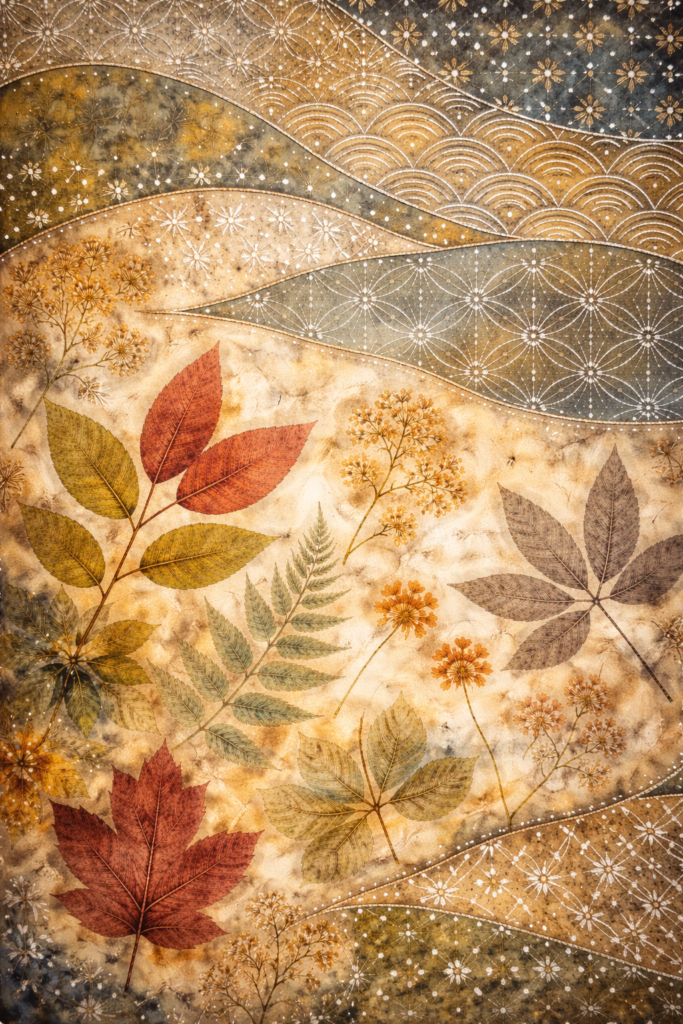
The Ecoprint and Sashiko technique combines natural printmaking and traditional Japanese sewing techniques.
Ecoprint presents leaf and plant motifs naturally,
while Sashiko adds structure, rhythm, and character through hand-stitching.
The process begins with arranging leaves on the fabric,
followed by Sashiko stitching to create the pattern, texture, and borders of the motif.
The fabric then undergoes an ecoprinting process,
where the colors and imprints of the leaves blend with delicate yet defined stitch lines.
The result is a fabric with a layered appearance,
with visual depth, artistic detail,
and exclusive value in every piece.
This technique emphasizes patience, precision,
and a balance between nature and craftsmanship.
4. INDIGO DYE
Indigo dye is a traditional fabric dyeing technique that uses fermented indigo leaves to produce a distinctive, deep, natural blue color.
The process involves immersing the fabric in an indigo solution,
where the blue gradually emerges as the fabric comes into contact with air.
Each dye creates a unique layer of color,
giving the fabric unique character and depth.
Tying, folding, or sewing techniques are often used
to create distinctive and authentic natural motifs.
The end result is a fabric with elegant,
strong, and highly artistic blue hues.
Indigo dye not only produces color,
but also demonstrates a process that requires patience, precision,
and a harmonious relationship between the craftsman and nature.